Mind map for grades 5 and 6: 1 page as a PDF, CHF 3.
5th–6th gradePreview · Full PDF after purchase
What your child practises
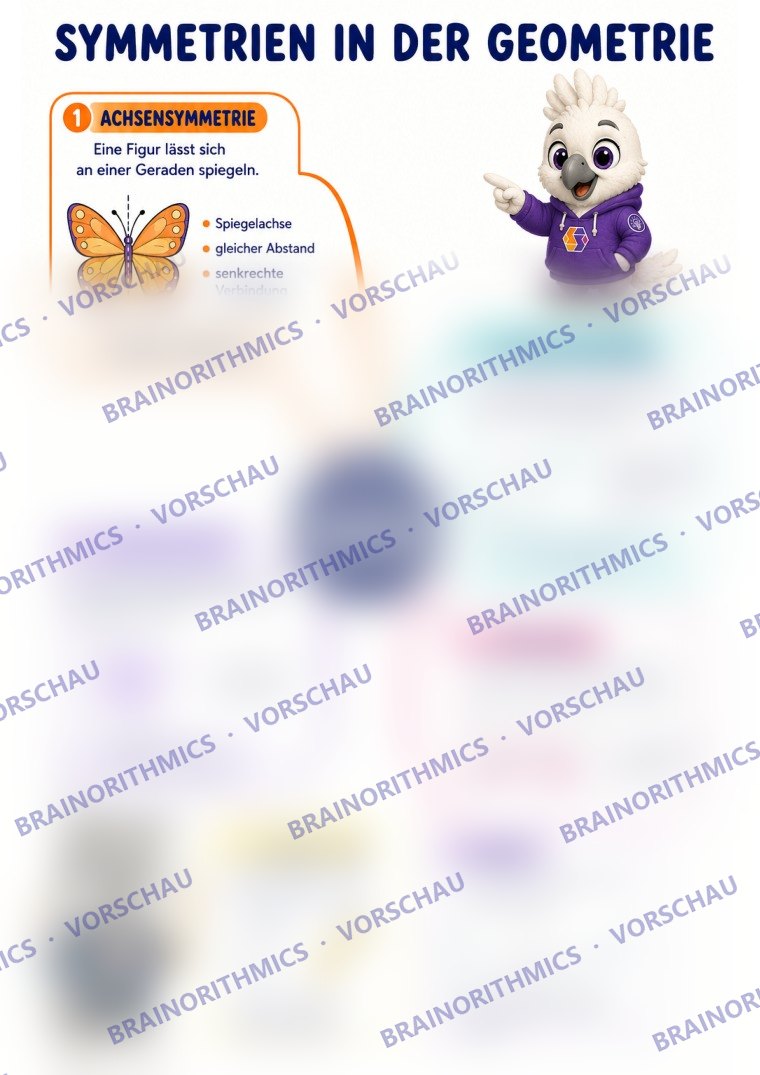
Every kind of symmetry on a single sheet: reflection, point symmetry, rotational symmetry and mirror images, each with an example figure and the terms that go with it. Two boxes at the end for checking and remembering: fold, reflect, rotate or measure distances. To hang up or file away.
At a glance
Grade
grades 5 and 6
Subject and topic
Maths, Symmetry in geometry
Length
1 page
Contents
A4 learning poster
Format
PDF to print
Delivery
Instant download and by e-mail
How to use the mind map
The mind map sums up a whole topic on one page. Hung above the desk or kept at the front of the folder, it helps when revising for a test and for looking things up during homework.
A good trick: your child explains one branch of the mind map to you in their own words. What they can explain, they have understood.
Maths in grades 5 and 6
In grades 5 and 6 maths becomes more abstract. Fractions are at the centre: recognising and calculating parts, showing fractions with models and on the number line, mixed numbers and unit fractions. Decimals and percentages follow, as well as the order of operations with brackets, rounding and estimating with large numbers and, in geometry, reflection symmetry, reflecting in a coordinate grid, point and rotational symmetry.
The content follows the Swiss Lehrplan 21 curriculum. Exactly when a topic is covered depends on the canton, the school and the textbook.
11 pages of calculating, puzzling and revising: large numbers, written calculation, fractions, decimals, percentages, measures, areas and word problems. Ideal for 5th and 6th grade: the tasks refresh the basics and lead step by step to more demanding topics. With an answer section for self-correction.
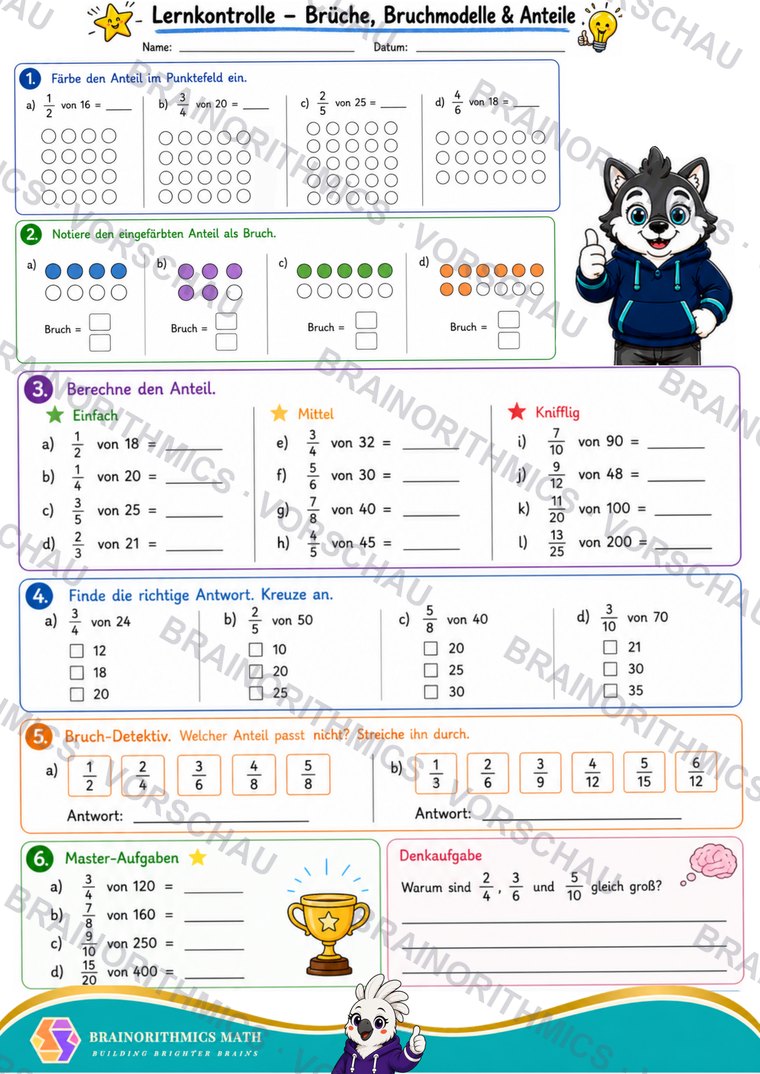
An assessment all about parts of a whole: colour in parts on a dot field, write them as a fraction, calculate parts (3 levels: easy, medium, tricky), multiple choice, fraction detective, master tasks and a thinking task. 41 points.
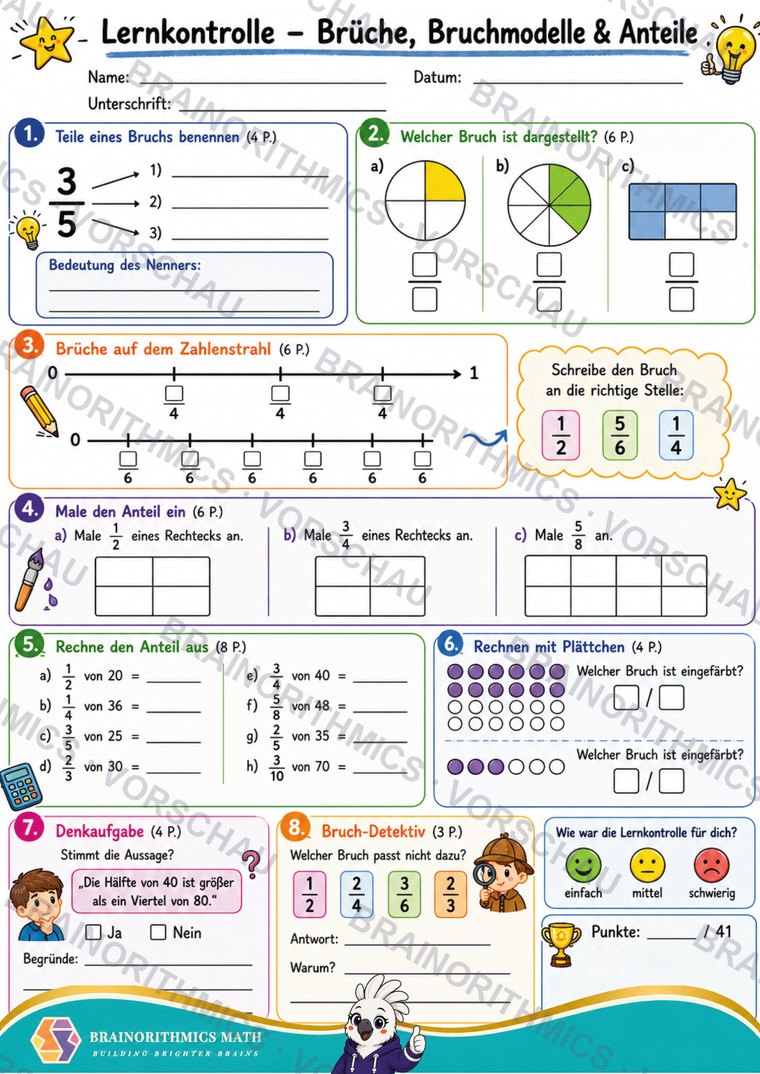
A comprehensive assessment: name the parts of a fraction, read fraction models, place fractions on the number line, colour in and calculate parts, work with counters, plus a thinking task and fraction detective. 41 points.