Sometimes a new interest begins quite suddenly.
A child wants to know how a robot works. Someone wants to try a creative technique, work with natural materials or make something with their own hands. Perhaps parents and children are looking for an activity they can deliberately experience together for once.
Not every interest has to turn straight into a long term course. Sometimes you are simply allowed to be curious.
That is exactly what the workshops at Brainorithmics are for.
Depending on the topic, our workshops are aimed at children, at adults or at children and adults together.
A workshop offers the chance to spend a limited time on a particular topic, to become active yourself and to get to know something new, without that automatically turning into a longer commitment.
Because a workshop does not have to be the beginning of something bigger. Sometimes an exciting afternoon is already exactly what it is meant to be.
What is a workshop at Brainorithmics?
A workshop is a self contained offer with one particular topic.
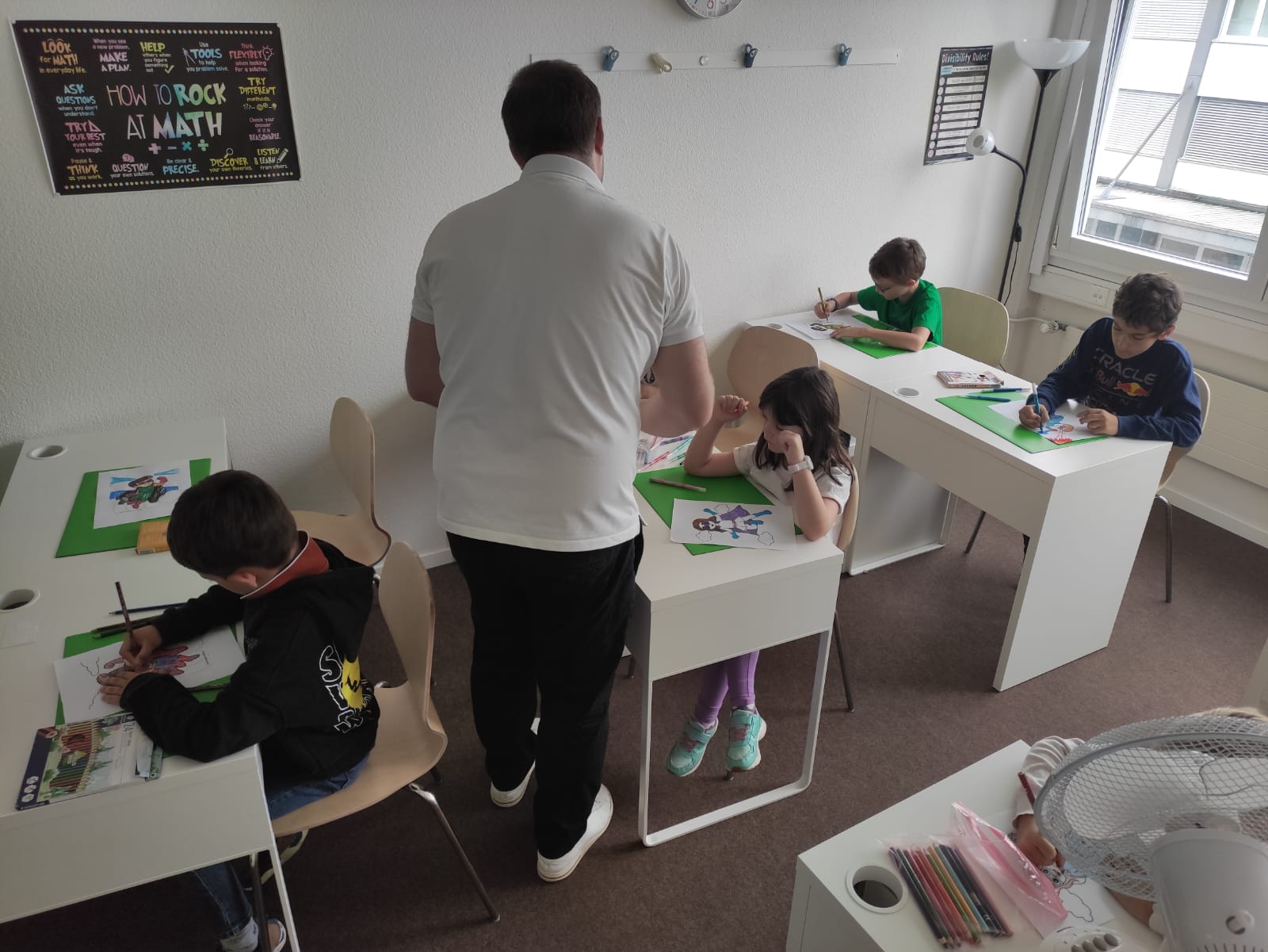
Depending on the workshop, people build, experiment, code, design, tinker or work with different materials.
Some workshops are aimed specifically at children. Others are meant for adults. And with others again, the shared experience of parents and children is at the centre.
Some workshops lead to an object you have designed yourself and can take home at the end. With others the focus is on a discovery, an experiment, a new technique or the shared experience.
The goal is not to cover as much material as possible within a few hours. A workshop follows a different idea: a topic should become something you experience.
Not only watching or listening. But trying it out yourself.
Three different workshop formats
Our workshops can appeal to very different groups of people.
Workshops for children
Children can get to know new topics, become active themselves and try out their own ideas.
Depending on the offer, it can be about technology, robotics, coding, science experiments, creativity or crafts, for example.
The focus is not on reaching a particular learning goal as quickly as possible. It is about being curious, doing something yourself and getting to know a topic in a different way.
Workshops for adults
It is not only children who get to discover something new at Brainorithmics.
Individual workshops can be aimed specifically at adults, for example around creative, craft or other special topics.
Here too: you do not need previous experience, and you do not have to turn it into a new hobby. A workshop may simply be an opportunity to take time for something new and to become creative or active yourself.
If previous knowledge is required, this is stated in the description of the workshop in question.
Workshops for parents and children together
Another format is workshops that are deliberately designed for children and an accompanying adult together.
That can be mother and child. Father and child. Or another adult the child is close to, together with the child.
Here it is not only the topic that matters but also doing it together. Both design, build, experiment or discover together.
The adult does not sit next to the child and watch. And the child does not have to work alone. Both become part of the workshop.
That creates shared time around a concrete activity, without anyone having to organise everyday life on the side.
Trying something out without committing long term
Often you only know whether you enjoy something once you have actually tried it. That is as true for children as it is for adults.
Perhaps robotics sounds exciting, but only when building for themselves does a child notice whether they really enjoy tinkering. Perhaps someone has wanted to try crochet, design or working with particular materials for a long time. Or parents would like to do something with their child in which both become active together.
A workshop creates a manageable setting for that.
If the topic appeals, the curiosity can carry on afterwards. Perhaps an interest in another workshop grows. Perhaps you want to carry on at home. Perhaps at some point it becomes a new hobby or a regular course.
And perhaps it simply stays at this one afternoon. That is completely fine too.
Doing it yourself instead of only watching
One important idea behind our workshops is taking an active part.
As far as possible, participants should not only watch someone else build, code, experiment or design something. They should do it themselves.
Depending on the topic, that means for example:
- assembling something
- examining materials
- trying out an idea
- steering or programming a robot
- getting to know a creative technique
- carrying out an experiment
- designing something with your own hands
- or developing a solution of your own
Not every result has to look the same. It is precisely the different ideas and approaches that can make a workshop interesting.
Which workshop topics are there?
Our workshop topics can change. That way different interests and groups of people can be reached again and again.
Depending on the current offer, there may for example be workshops in the areas of technology, robotics, coding, science, creativity or crafts. Some are aimed at children, some at adults and others deliberately at children and adults together.
Seasonal topics or special one off formats can also be part of the programme.
Which workshops are currently taking place, who they are meant for and at which location they are offered can be found in the description of each workshop under our special offers.
Technology and robotics
How do you get something to move? How does a robot react to a command? What happens when a construction does not work as planned?
Technical workshops offer many opportunities to try things out. Depending on the topic, people build, construct, code or experiment with different solutions.
It is not only the finished result that matters. The questions along the way are interesting too: why does it not work yet? What could we change? Is there another way?
That turns building and tinkering into an active process of discovery.
Science experiments
In experiments something becomes visible that was perhaps only a question before.
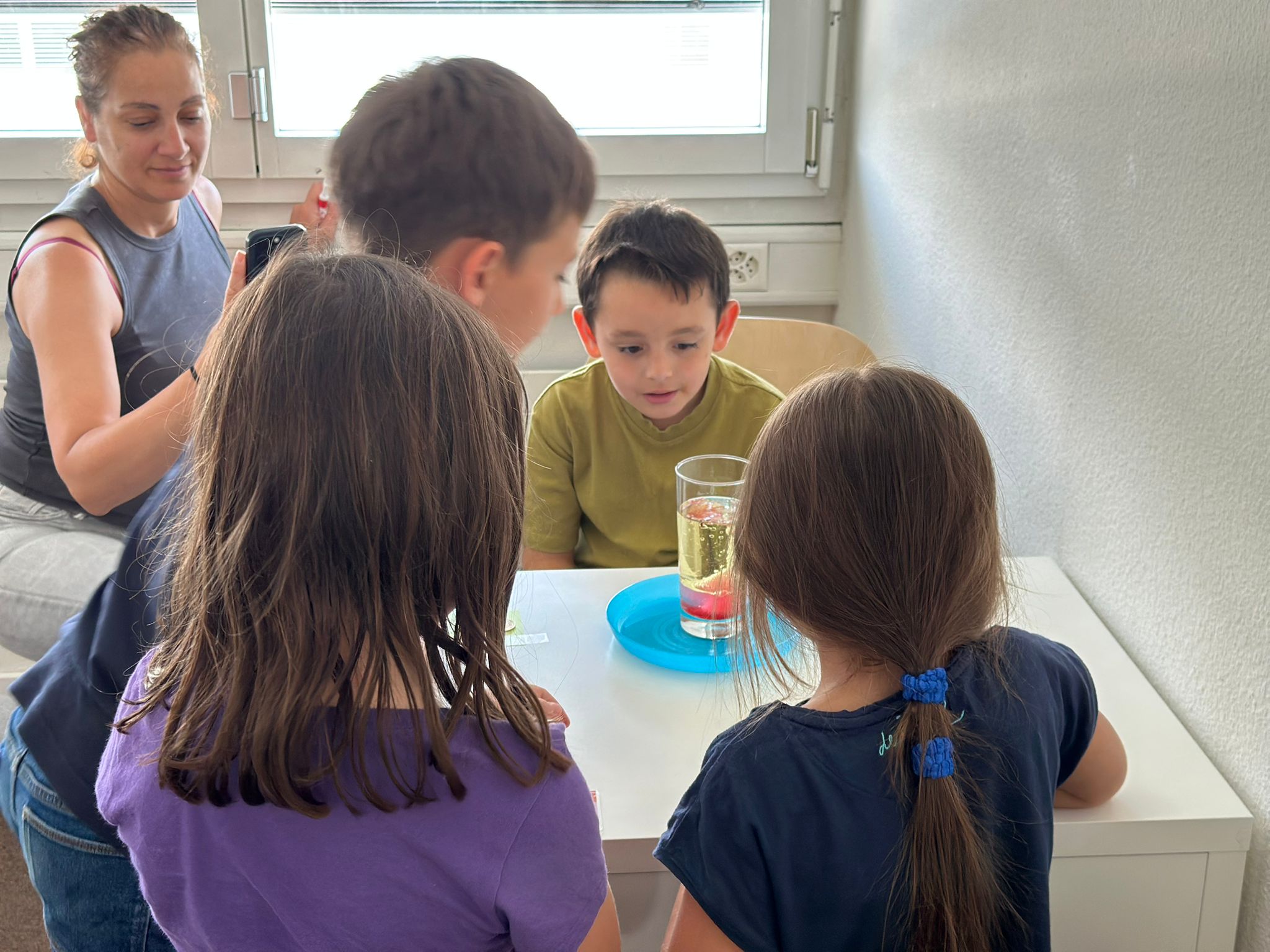
What happens when we combine two materials? Why does something change? What do we observe? And does the same thing happen on the second attempt?
Depending on the workshop, participants can get to know and investigate different scientific phenomena themselves. In offers for children, topics, materials and explanations are chosen to suit the age.
Along the way, participants meet the basic steps of scientific discovery: observing, guessing, trying out, comparing and testing again.
Not every experiment has to work exactly as expected the first time. Sometimes that is precisely where the most exciting question comes from: why did something different happen from what we thought?
Creativity and crafts
Creative and craft topics have their place at Brainorithmics too.
Depending on the workshop, children, adults or both together can work with colours, shapes and different materials, get to know new techniques or design something of their own.
In the past there was, for example, a workshop around lavender and natural materials as well as a crochet workshop in which first small projects of the participants' own came about. You will find some impressions of them in our gallery.
Workshops like these make room for a different kind of discovery:
- trying out
- designing
- working step by step
- changing ideas
- and perhaps at the end holding something in your hands that you made yourself
Coding and digital topics
Coding can also be the topic of a workshop.
The point is not to learn as many coding terms as possible within one afternoon. Depending on the offer, small animations, games, tasks with robots or other digital projects can come about.
Beginner workshops often require no particular previous knowledge. If a workshop does require certain experience, we point this out in its description.
Creating something together
In our workshops for parents and children, working together takes on a special meaning.
In everyday life parents and children do spend a lot of time together, but they do not always both work on the same thing. A shared workshop creates a different setting.
Perhaps one holds something in place while the other builds. Perhaps the child has an idea and the adult finds a way to carry it out. Perhaps something does not work and both keep thinking about it together.
It does not always have to be the adult who knows how it works. That is exactly what can make it exciting. Both are allowed to try things out.
And at the end the experience belongs to both of them.
How does a workshop work?
No workshop has to run in exactly the same way. A robotics workshop needs a different setting from a creative afternoon, a workshop for adults or a shared offer for parents and children.
Even so, there are some elements that come up often.
Arriving and getting your bearings
At the start participants get to know the room, the person leading the workshop and the topic. What are we doing today? Which materials are available? What can we try out?
A clear start gives orientation and makes people curious about the topic.
Discovering the topic
Then comes a shared introduction. Perhaps there is a question. An example. A small experiment. A story. Or a first challenge.
The introduction should not give everything away in advance, but make people want to become active themselves.
Trying it out yourself
The biggest part of a workshop belongs to doing things yourself. Depending on the topic, people build, experiment, code, design or tinker.
The person leading the workshop accompanies them, answers questions and helps where help is needed. At the same time there should be enough room for ideas of your own.
Break and exchange
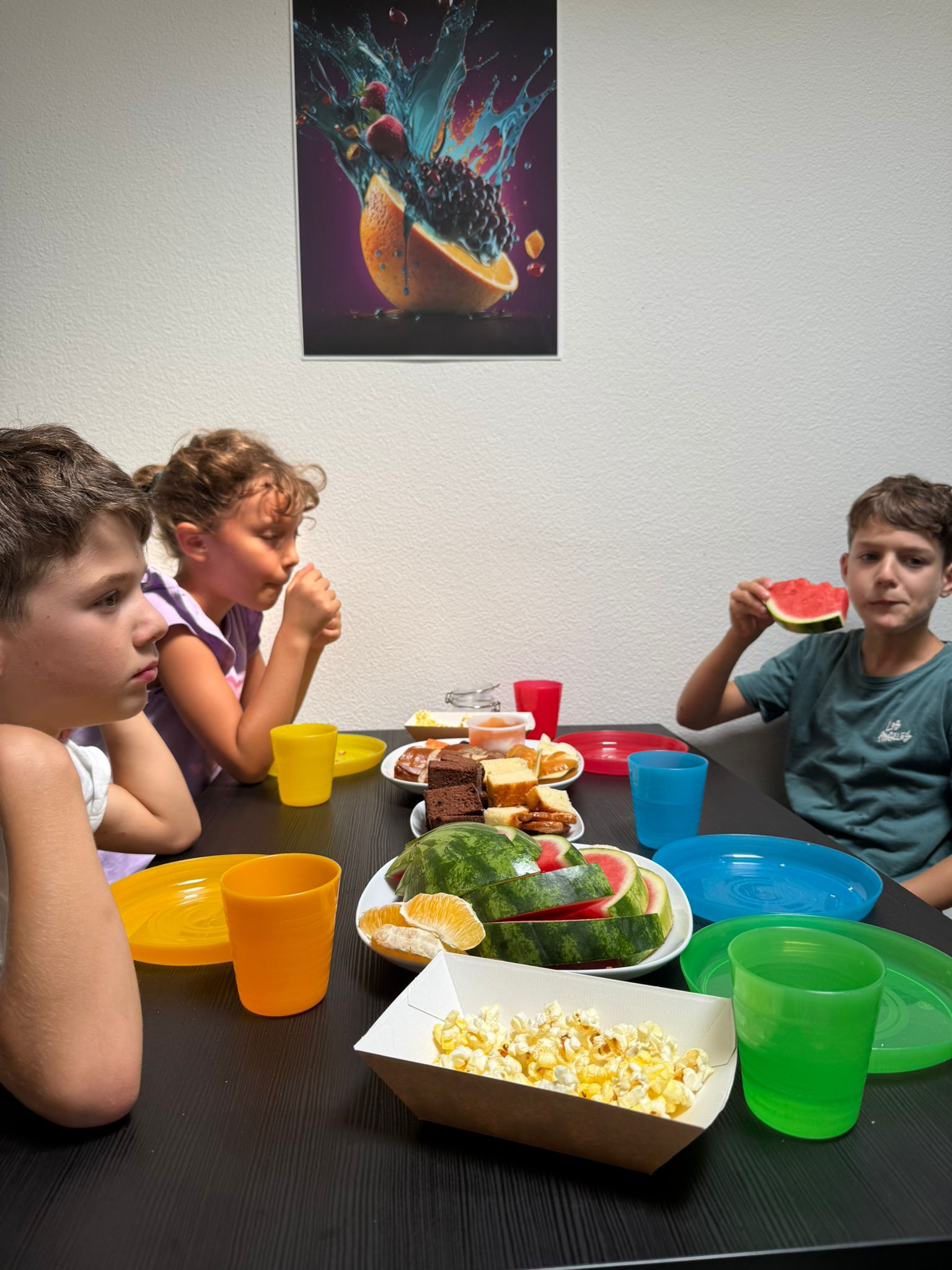
Depending on length and format, breaks, movement or time for a shared exchange can be part of it. Whether food is provided is stated in the description of the workshop in question.
Finishing together
At the end there can be room to share results, discoveries or experiences with each other. What came about? What was surprising? What was harder than expected? Which idea worked particularly well?
That gives the workshop a shared ending.
Do you need previous knowledge?
Many of our workshops require no particular previous knowledge. A workshop in particular can be an opportunity to meet a topic for the very first time.
If an offer requires certain knowledge or experience, we state this in its description. That applies to workshops for children as well as to workshops for adults and shared workshops for parents and children.
What age are the workshops suitable for?
That depends on the workshop in question. So offers for children each have their own age recommendation. For shared workshops for parents and children, it is also stated which age of child the offer is meant for. Other workshops are aimed exclusively at adults.
So the description of each workshop shows at a glance:
- Who is the workshop meant for?
- Is there an age recommendation?
- Do children and adults take part together?
That way you can check before registering whether the format suits you.
When a child would rather watch first
In workshops for children and families, a new environment feels different for every child. Some children start straight away. Others first want to see what the group is doing. Both are fine.
A shared activity can create a natural way in, because children can first connect with others through the material, the task or the shared project.
If you already know that your child needs a little more time or support in new groups, you are welcome to tell us before the workshop.
Friends, siblings and accompanying adults
Anyone who wants to take part together with a friend or a sibling should look at the age recommendation for workshops for children.
For offers for parents and children, it is stated how many children and accompanying adults can take part together. For workshops exclusively for adults, the conditions in the description of that workshop apply.
If you are unsure which registration suits your situation, you are welcome to contact us.
What do you need to bring?
That depends on the workshop. The materials and tools needed for the activity are usually provided by Brainorithmics. If something special has to be brought along, this is stated in advance.
For workshops with paint, glue, natural materials or similar materials, clothing that is allowed to get dirty can be a good idea.
If allergies, intolerances or other information are important for taking part, please let us know if possible when registering.
And if a workshop does not suit you?
Not every topic excites every person. It does not have to.
A child may discover that robotics is not their thing after all. An adult may notice that a particular creative technique is less enjoyable than expected. Or parents and child discover something together that they had not had on their radar at all.
Precisely because a workshop is limited in time, it offers the chance to get to know something without having to know in advance whether a long term interest will come of it.
Finding out «That is not my thing.» can be completely fine too.
Workshops for school classes, clubs and groups
Depending on the topic and availability, workshops may also be possible for school classes, clubs, private groups or other communities. Age, group size, available time and the topic you would like can be taken into account.
If you are planning a workshop for a group, please contact us with the key details. We look together at which format is possible and sensible in the setting you have in mind.
Workshop, holiday camp or regular course?
Brainorithmics offers different formats. Which one fits depends on what you are looking for right now.
Workshop
A workshop is compact and focused on one topic. It offers the chance to get to know something new, to try it out or to experience it together. Depending on the offer, it is aimed at children, adults or both together.
Holiday camp
Our holiday camps are aimed at children and offer more time during the school holidays for different activities, projects and discovering things together. Content, age groups and length can vary from camp to camp.
Regular course
A regular course is geared towards continuous learning over a longer period. In our maths courses and coding courses, content and skills can be built up and developed further step by step.
None of these formats has to lead automatically to the next. A workshop may simply remain a workshop.
What can stay with you after a workshop
Sometimes it is something you take home. An object you built yourself. A piece of creative work. A construction.
But perhaps it is also something you cannot put in a bag. A surprising experiment. A new technique. An idea. A shared memory. Or the discovery: «I would like to do that again.»
Especially with shared workshops for parents and children, something else can be added: the memory of having tried out and created something together.
Not the adult for the child. Not the child alone. But both together.
Why workshops belong to Brainorithmics
At Brainorithmics we want to make room for discovering something new. For children. For adults. And for families who want to experience something together.
Not every interest needs a long term course straight away. Not every creative idea has to become a new hobby. And not every shared activity needs a big goal.
Workshops make room for individual topics, special projects and new experiences. For trying out. For discovering. For designing. For tinkering. For doing things together.
And afterwards everyone may decide for themselves whether the topic carries on. Or whether the workshop simply remains a good experience. Both have their place.
Workshops in Aarau and Cham
Depending on the offer, our workshops can take place at our locations in Aarau and Cham.
Which location, which topic and which group of people is planned for a date can be found directly in the description of each workshop. It also states whether the workshop is meant for children, adults or children and adults together.
Length, age recommendation, food, the clothing needed and other organisational information are listed there as well.
When are the next workshops?
Our workshops are offered as individual dates spread over the year. Topics, groups of people and dates can change.
Which workshops are currently planned, who they are suitable for and where they take place can be found in our current offers and events.
If you are unsure whether a particular workshop suits you or your child, you are welcome to contact us before registering.
Because a workshop does not have to change as much as possible. Nor does it have to be the beginning of a new hobby or a long term course.
Sometimes it is enough to be able to say at the end: «I tried that out today.» «We made that together.» Or simply: «That was exciting.»
That is exactly what a workshop may be there for.
Frequently asked questions
Who are the workshops suitable for?
That depends on the workshop in question. Some offers are aimed specifically at children, others at adults, and others again are designed as a shared experience for a child and an accompanying adult. For workshops for children and for parents and children, we always give an age recommendation. It is based on the topic, the materials used and the kind of tasks. If your child is just outside the stated age range, you are welcome to contact us. Then we look together at whether the workshop might still be suitable.
Are there also workshops just for adults?
Yes. Alongside our offers for children, individual workshops can also be offered specifically for adults. They can focus, for example, on creative, craft or other special topics. Which group of people a workshop is meant for can be found in its current description.
What is a workshop for parents and children?
In these workshops a child and an accompanying adult take part together. That can be, for example, mother and child, father and child or another adult the child is close to, together with the child. Both take an active part in the workshop and design, build, experiment or discover together. Which age of child such a workshop is meant for and how registration works is stated in the description of the workshop in question.
Do you need previous knowledge?
Many of our workshops require no particular previous knowledge. A workshop in particular offers the chance to get to know and try out a new topic for the very first time. If a particular workshop does require knowledge or experience, we point this out explicitly in its description.
How long does a workshop last?
The length depends on the topic and format in question. A creative workshop can need a different amount of time from, for example, a technical workshop or a shared offer for parents and children. So you will find the start, end and length directly in the description of each workshop.
What does a workshop cost?
Prices can differ depending on topic, length, materials and format. You will find the current price in the description of each workshop. For shared offers for a child and an accompanying adult, it is also clearly stated whether the price is per person, per team or calculated in another way.
What do you need to bring to a workshop?
The materials, tools or devices needed for a workshop are usually provided by Brainorithmics. If something special has to be brought along, we let you know in advance. For workshops with paint, glue, natural materials or similar materials, clothing that is allowed to get dirty can be a good idea. If allergies, intolerances or other information are relevant for taking part, please let us know if possible when registering. That way we can clarify early on what can be taken into account.
When are the next workshops?
Our workshops take place as individual dates spread over the year. Topics, groups of people and dates can change. You will find the current offers under our special offers and events. Depending on the offer, we also announce further dates through our newsletter and our social media channels. Since group size and available places differ from workshop to workshop, we recommend taking a look at the description of each one if you are interested.
Can we book a workshop for a school class, a club or a private group?
Depending on the topic, group size and availability, workshops for school classes, clubs or private groups may also be possible. If you are planning something like this, it is best to tell us the group size, the age of the participants, the period you have in mind and, if you already have one, an idea for the topic. Then we can check together which format is possible in the setting you would like.
My child does not know anyone in the group. Is that a problem?
Many children come to a workshop without knowing the other participants beforehand. How quickly a child feels at home in a new group is individual, though. Some children start the activity straight away, others would rather watch first. Both are fine. The shared task can offer a natural way in, because the children can connect with each other through the material, the experiment or the shared project. If you know that your child needs a little more time or support in a new group, you are welcome to let us know in advance.
Do parents stay during a workshop for children?
That depends on the format in question. In shared workshops for parents and children, the accompanying adult is naturally part of the workshop and takes an active part. For workshops designed specifically for children, the description states whether and in what form parents or accompanying adults are present. That way you already know before registering how the workshop is organised.
Can siblings take part together?
In principle taking part together can be possible, as long as the workshop suits both children and places are available. With a bigger age gap in particular, we recommend paying attention to the age recommendation of the workshop. If you are unsure, you are welcome to tell us the age of both children. Then we help you judge whether the offer suits both of them.
What happens if someone is ill on the day of the workshop?
Please let us know as early as possible. Which options there are for rebooking or cancelling depends on the conditions of the workshop in question. You receive the relevant information when booking, or you can ask us.
Where do the workshops take place?
Depending on the offer, our workshops can take place at our locations in Aarau, Laurenzenvorstadt 77, or Cham, Riedstrasse 3. Which location is planned for a particular workshop can be found directly in its description. Individual topics or formats may only be offered at one particular location.