The school holidays are a special time. No timetable, no pressure of grades and a little more room for the things that often come up short during a normal school day: trying things out, discovering, building, experimenting, playing and developing your own ideas.
At the same time, a very practical question comes up for many families during the holidays: how does my child spend this free time in a meaningful way, and how can childcare be organised around our family and working life?
That is exactly where our holiday camps at Brainorithmics come in.
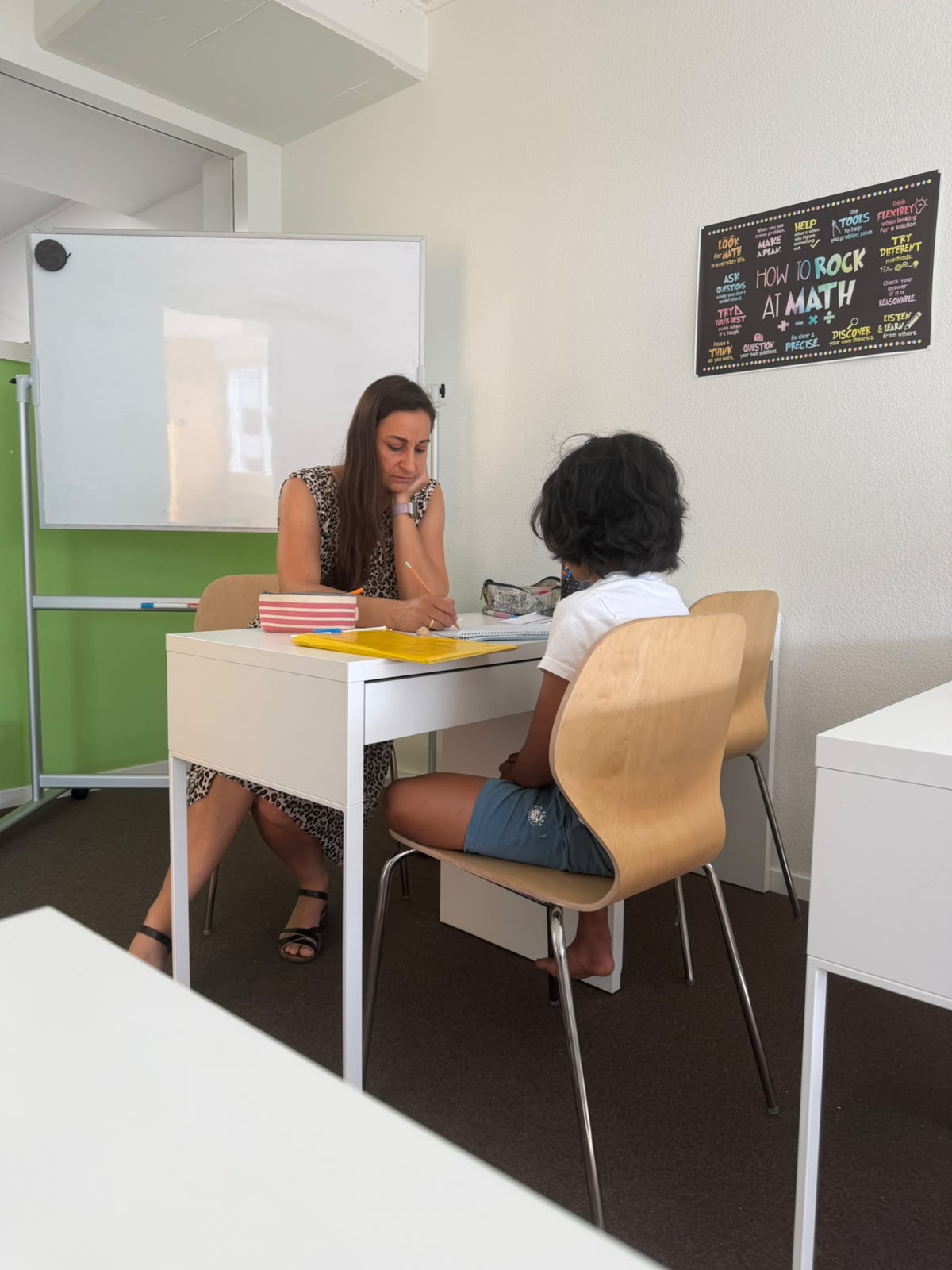
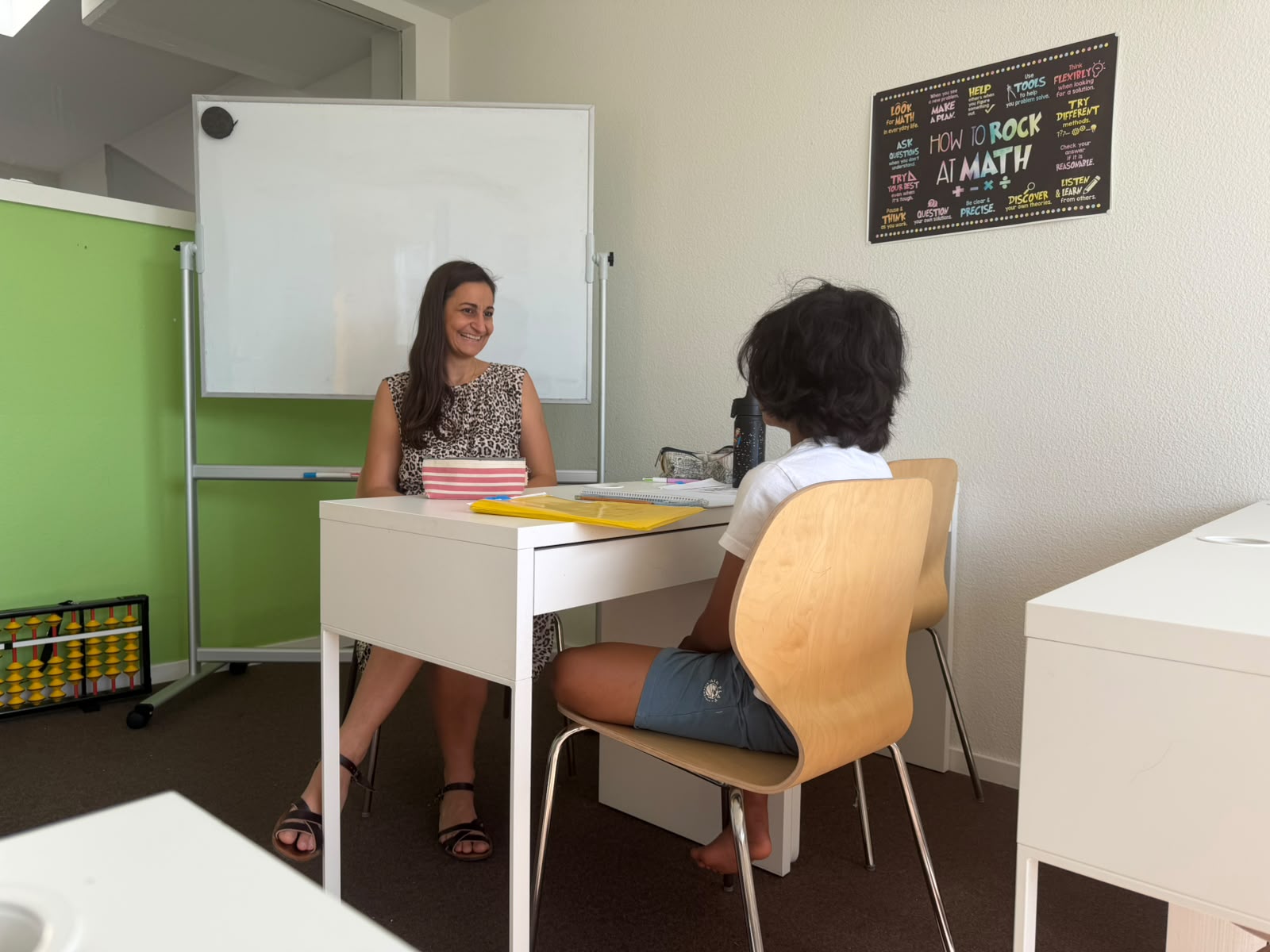
Depending on the camp, the children work on different topics from maths, logic, science, technology, creativity and coding. Classic school learning is not the focus.
The children should become active themselves. They are allowed to try things out, ask questions, build something, change it, start again and experience that an idea does not have to work at the first attempt.
At the same time we make sure that movement, shared breaks, games and time together get enough room as well.
Depending on the specific camp, our holiday camps can be attended half day or full day. For full day options there are variants with or without a lunch package, depending on the camp. That way families can choose the option that fits their holiday routine.
This article shows what makes a good holiday camp for children, how a camp week at Brainorithmics can be structured and what parents should look for when choosing a holiday programme.
Holidays that are not simply bridged
For many families, holiday childcare is first of all an organisational necessity. That is entirely understandable.
For us, though, a holiday week may be more than time that somehow has to be filled. The holidays offer a special opportunity to try out something new without the pressure of grades and without the tight rhythm of the school day.
A child can spend longer with a single idea. It may try something that does not work. It can think about why. Then it changes something and tries again.
That is exactly where we see the great value of holiday camps. Not every activity has to end in an assessment. Not every task needs a school grade.
Sometimes the only question you need is this: what happens if we do it differently?
That freedom is what we want to use at Brainorithmics.
Who is a holiday camp for?
Depending on the topic, our holiday camps are aimed at different age groups. The specific age recommendation is therefore given separately for each camp.
That matters to us, because a younger primary school child sometimes needs different tasks, different support and a different rhythm than an older child.
A holiday camp can be particularly exciting for children who like to:
- try things out and experiment,
- build or design things,
- puzzle and solve problems,
- get to know new technologies,
- work creatively,
- meet new people or
- simply experience something that is different from the normal school day.
A child does not have to be especially good at maths, science or coding already. For many camps no prior knowledge is needed either. Curiosity and a willingness to get involved in something new matter far more.
At the same time, children who already attend one of our maths or coding courses can take part. For them a holiday camp offers a different setting: more time for projects, different topics and less orientation towards the weekly course rhythm.
But a camp can just as easily be the very first contact with Brainorithmics.
At Brainorithmics different learning worlds belong together
Brainorithmics does not stand for a single subject. What interests us is what happens when children connect different areas with each other.
Maths helps with structuring. Logic helps with solving problems. Science invites questions and experiments. Technology makes ideas visible. Coding can show how an idea turns into a sequence of clear instructions. And creativity makes sure that not every project looks the same.
Depending on the topic of a holiday camp, these areas can carry different weight. In some camps coding plays a role. In others, experiments, maths, technology, creative projects or other topics may be more central.
Our aim is therefore not for every holiday camp to be built the same way. The shared idea is rather this: children should discover, think, try things out and become active themselves.
What can happen during a camp week
The exact content always depends on the particular topic. Even so, there are some elements that are typical of our holiday camps.
Discovering and experimenting
Children learn a great deal when they do not just listen but do something themselves. Experiments and practical tasks can therefore be an important part of a camp week.
What happens if we combine two materials? Why does a construction not work? How can we make it more stable? What changes if we adjust only one thing?
An attempt that does not work straight away is not a failure. Often that is exactly where the real thinking begins.
Logic and maths
In a holiday camp, maths can look completely different from a classic worksheet.
Perhaps a group has to solve a riddle. Plan a construction. Spot a pattern. Estimate a quantity. Develop a strategy. Or work out which of several routes works best.
That way maths becomes a tool that helps with solving a concrete task.
Coding and digital projects
In camps where coding is part of the topic, the children work with digital tools in an age appropriate way. That can mean first visual coding tasks, animations, small games or other digital projects.
Coding is one part of the camp, not automatically the centre of the whole week. It matters to us that screen phases are embedded sensibly and alternate with other activities.
Building and creating
Your own ideas become particularly exciting when something is created at the end that you can see or show. That can be a construction, an experiment, a model, a creative piece of work or a digital project.
Not every camp has to lead to the same end product. What matters far more is that children develop and shape as much as possible themselves.
Movement, play and breaks
Even an educational holiday camp needs holidays. Children should not spend the whole day working on tasks in full concentration.
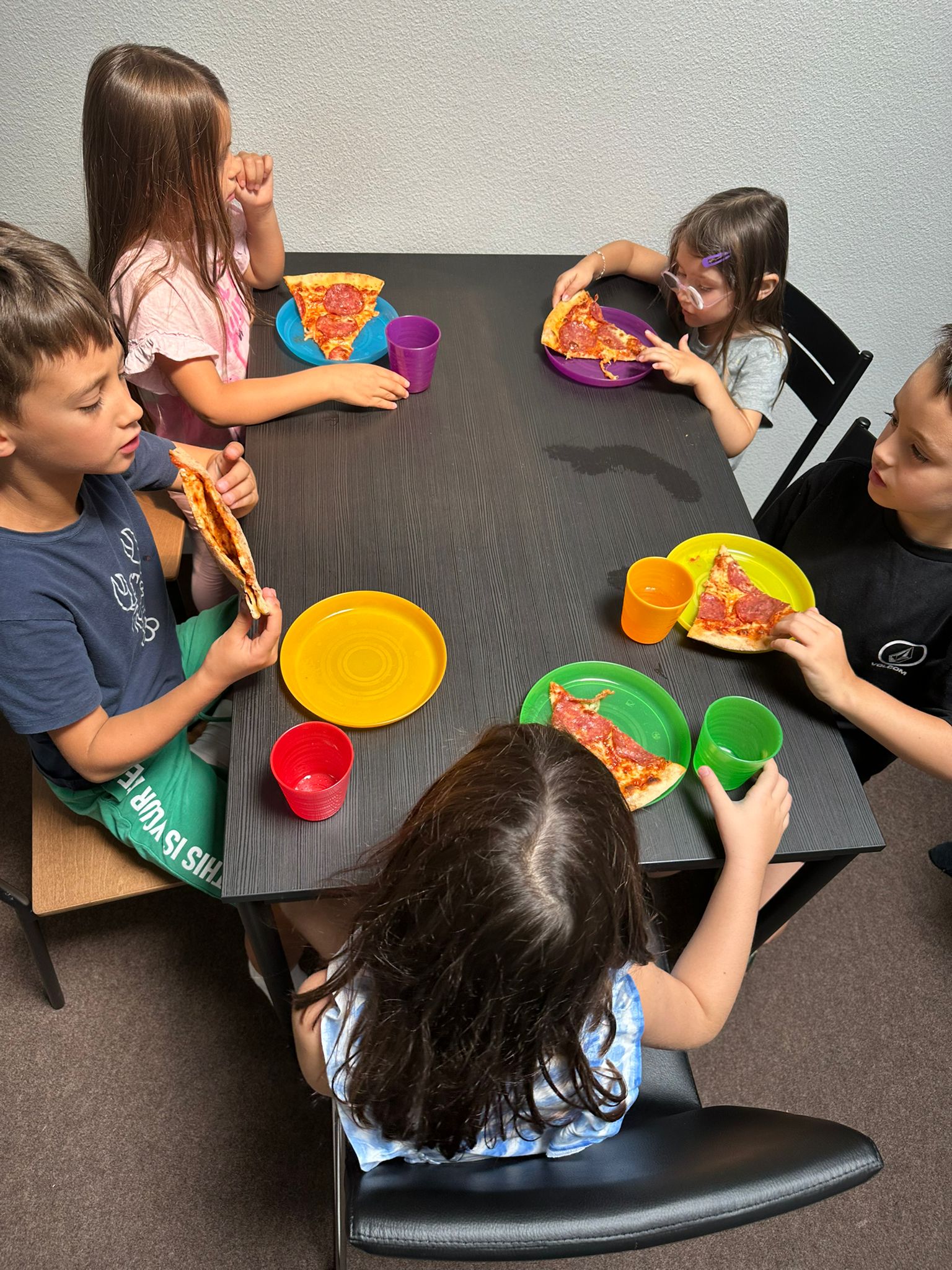
Breaks, movement and playing together are therefore just as much part of a successful camp for us as projects and experiments. Especially on longer camp days, the change between concentration and movement is important.
A reliable structure gives orientation
Even when the topics differ, a clear daily structure helps. In a new group in particular, children often feel more comfortable when they know roughly what is coming.
A camp day can begin, for example, with a shared welcome and a short introduction to the topic of the day. Depending on the camp, project, thinking, creative or experimenting phases follow. In between there are breaks, movement and time for eating or playing together. Later the work continues or a new part of the programme begins.
At the end of the day everyone can look at it together: what did we do today? What worked? What would we like to develop further tomorrow?
The exact times, contents and organisational details are communicated separately for each holiday camp.
Half day or full day: families need different solutions
Not every family needs the same childcare. That is why we want to keep our holiday camps as flexible as possible.
Depending on the camp, children can take part half day or full day. For full day options there are variants with or without a lunch package, depending on the specific camp. Parents can therefore, for instance, send food along themselves or choose the catering option offered.
Which options are available for a particular camp can always be seen directly in that camp's description.
In this way a holiday camp should not only suit the child in terms of content, but also fit family life as well as possible.
And what about screen time?
As soon as coding or digital projects appear in a camp, the question of screen time is a fair one.
Yes, with topics of that kind children spend part of the time at the computer. For us, though, it makes a difference how a screen is used.
When coding or designing, the child becomes active itself. It plans, tries things out, gives instructions, changes something and checks the result. That is clearly different from purely passive media consumption.
Even so, we do not want a holiday camp to consist mainly of screen time. Digital phases therefore alternate with other activities. Planning, sketching, discussing, experimenting, building, playing and movement are just as much part of it.
And because not every holiday camp has the same focus, the share of digital activities can differ from camp to camp.
Community is part of the camp
A holiday camp is not only the programme. Children spend several hours or several days together. They work on tasks jointly, compare ideas, help each other or explain how they solved something.
Children from different schools and classes often meet here. That offers the chance to make new contacts outside the familiar class group.
We therefore deliberately want to create situations in which children do not only work next to each other, but also with each other. Because a good idea can sometimes come about precisely when two children approach the same problem in completely different ways.
Safety and supervision
Parents should be able to bring their child to a holiday camp with a good feeling. Clear organisation is therefore just as important as an exciting programme.
Before a camp starts we communicate the important organisational information. That includes, for example, drop off and pick up times, ways to reach us and details of what a child should bring along.
Important information about supervision, such as allergies, intolerances or other relevant details, should be shared with us before the camp begins so that we can take it into account.
Group size and supervision are also planned so that they suit the particular age group and programme.
It is especially important to us that children feel welcome in our rooms and know who they can turn to if they have a question or need help.
How parents can recognise a good holiday camp
When choosing a holiday camp it is worth looking at a few points more closely.
Is there a recognisable concept?
A good camp should be more than a random sequence of different activities. Parents should be able to see what idea lies behind the camp and what kind of activities are planned.
Does the programme suit the age group?
An exciting task for a ten year old can be too difficult for a six year old and too easy for a thirteen year old. Content and supervision should therefore suit the particular age group.
Are group size and supervision right?
Children need enough opportunities to ask questions and get support. Look at whether the group size and the number of supervisors suit the age and the type of programme.
Is there a good balance between activity and breaks?
A holiday camp should not consist of one single long block of learning. Concentration, movement, play and rest should alternate sensibly.
Are organisational questions answered clearly?
When does the camp start? When does it end? What does the child need to bring? How do meals work? How does pick up work? Who can parents turn to with questions?
Clear communication before the camp begins creates confidence.
Are individual notes taken seriously?
Every child is different. Perhaps it is very reserved at the first meeting. Perhaps there is an allergy or an intolerance. Perhaps parents would like to know in advance how much screen time is planned.
Questions like these should be open to discussion before registering.
What can remain after a good camp week
For us the aim of a holiday camp is not to tick off as many tasks as possible.
It is particularly nice when a child wants to show something at the end. Perhaps a project. A construction. An experiment. An idea. Or simply something it did not know before.
Perhaps it talks at home about a new friend. Perhaps it wants to try something from the camp again. Perhaps a question even comes up: «Can I carry on with this?»
Moments like these show that real curiosity has grown out of a holiday activity. And that is exactly what we want to achieve.
Holiday camp, workshop or regular course?
At Brainorithmics there are different ways to try out something new.
Workshop
A workshop is compact and usually concentrates on one particular topic. It is a good fit when a child wants to get to know something new without committing to a longer period straight away.
Holiday camp
A holiday camp gives children more time. They can work on a topic over several days, develop projects further and at the same time spend the holidays together with other children. Depending on the offer, taking part half day or full day is possible.
Regular course
A regular maths or coding course runs over a longer period. That way knowledge and skills can be built up systematically, step by step.
None of these formats is fundamentally better than the others. They have different goals. A workshop can spark curiosity. A holiday camp can deepen an idea. A regular course can turn it into lasting knowledge and skill.
When do the holiday camps take place?
Our holiday camps take place during selected school holidays. Topics, age groups, camp times and the available half day and full day options can differ from camp to camp. The catering options, for example full day with or without a lunch package, are also stated in each camp's description.
We publish the current holiday camps on our website and through our other communication channels. Since we deliberately work with limited group sizes, it can make sense to find out about upcoming dates early.
Holiday camps at Brainorithmics in Aarau and Cham
Depending on the specific camp, our holiday camps take place at our locations in Aarau and Cham.
For us, a successful holiday week is not measured by how many pages a child has worked through. What matters far more is this: did it discover something new? Did it try something out itself? Did it develop an idea further? Did it experience something together with other children? And does it go home at the end with the feeling: «I would like to do that again»?
That is exactly the space we want to create with our holiday camps.
The holidays may be a time to rest. But at the same time they may be full of ideas, discoveries and new experiences.
Frequently asked questions
What age are the holiday camps suitable for?
Depending on the topic, our holiday camps are aimed at different age groups. The exact age recommendation is given separately for each camp. That way content, pace and supervision can be matched as closely as possible to the children taking part.
What exactly do the children do during a camp week?
That depends on the topic of the particular camp. Depending on the camp it can include experiments, logic and maths tasks, technology, creative projects, building, designing or coding. It matters to us that the children become active themselves, try things out, develop their own ideas and work together on tasks or projects. Movement, games and breaks are part of the daily routine as well.
Is it possible to take part half day or full day?
Depending on the camp we offer both half day and full day options. For full day offers, variants with or without a lunch package can be available, depending on the particular camp. You will find the exact times and booking options with each holiday camp.
Does my child need prior knowledge?
For most holiday camps no particular prior knowledge is needed. Where coding is part of a camp, both children without experience and children with prior knowledge can take part. Tasks and support are adapted to the individual level as far as possible. Curiosity and a willingness to try something new matter far more than prior knowledge.
Is coding part of every holiday camp?
Not necessarily. The topics of our holiday camps can change. In some camps coding is part of the programme, in others experiments, maths, logic, technology or creative projects may be more central. What each camp covers is described specifically for that camp.
How much time do the children spend in front of a screen?
That depends on the topic of the particular camp. Where coding or a digital project is part of the camp, the children spend part of the time at the computer. Screen phases alternate with other activities such as planning, experimenting, building, playing, movement and shared breaks. It matters to us that digital media are used actively and sensibly and do not determine the whole camp day.
When do the next holiday camps take place?
Our holiday camps take place during selected school holidays. We publish the specific dates, topics, age groups and booking options on our website and through our other communication channels. Since we work with limited group sizes, it is worth finding out about upcoming camps early.
What should my child bring along?
That depends a little on the particular camp and on the weather. As a rule, comfortable clothing makes sense, along with suitable weather appropriate gear for activities outdoors. If your child needs medication or has to bring other personal items, please let us know in advance. You will receive precise information about what is needed before the camp begins.
How large are the groups at the camp?
We deliberately work with manageable, age appropriate groups. Group size and supervision depend on the age, topic and structure of the particular camp. In this way we want to make sure that children can ask questions, receive support and at the same time work together with others.
How are allergies or intolerances taken into account?
Please tell us about allergies, intolerances or other important information regarding supervision when you register. That way we can take the information into account before the camp begins and clarify with you what is needed in your specific case.
Where do the holiday camps take place?
Depending on the particular camp, our holiday camps take place at our locations in Aarau, Laurenzenvorstadt 77, and in Cham, Riedstrasse 3. Which locations are offered for a specific camp can be seen in that camp’s description.