“They already have computing at school.” And: “In a few years AI will write all the code anyway.”
We hear these two sentences from parents regularly, sometimes in the same conversation. Both are understandable. But both fall short.
What school does
In the Swiss Lehrplan 21 curriculum, the module “Media and Computing” is part of compulsory school. Children learn the basics of using media and first ideas of computer science. How much time is available for it and how practical the work is varies a lot from school to school.
What we experience again and again in our courses: children have “already done something with computers” at school but do not know what a folder is, how to save a picture and find it again, or what a link actually is. That is no criticism of schools. With a whole class and only a few lessons there is often little time for basics like these.
This is exactly what Digital Literacy is for at Brainorithmics, for children aged 7 to 10: using computers, the internet and the like safely and confidently before actual coding begins.
“AI writes all the code anyway”
AI tools can write code today, and they are getting better at it. That is exactly why one skill is becoming more important, not less: understanding what a program is supposed to do, breaking a task into steps, checking a result and finding a mistake.
Anyone who wants to give an AI a good instruction has to have thought the problem through themselves. Anyone who wants to use its code has to be able to judge whether it is right. You do not learn that by watching but by building things yourself.
For children, coding does not mean memorising commands anyway. It means planning, building, testing and improving. This way of thinking stays, whatever tool writes the code in ten years. And it helps far beyond the computer, in maths as well as in any task that has to be broken into smaller steps.
By the way, in our coding courses AI is not an opponent but a topic: from age 12 young people work with Python and on projects with artificial intelligence. The AI course is available on site and online, in German or in English.
What children actually do with us
The levels build on each other, and the age is a guide:
- Coding Knight, ages 5 to 7: a playful introduction to coding for which children do not yet need to be able to read, partly without any typing at all.
- Digital Literacy, ages 7 to 10: using computers and the internet safely.
- Visual Programming, ages 9 to 11: their own animations and games in Scratch, plus worlds in Minecraft.
- Game Design, ages 10 to 12: their own games, from the idea to the finished level.
- Python, ages 12 to 18: text based programming and their own projects, plus projects with artificial intelligence.
There is always a project of their own at the centre, something your child can be proud of. The children work in groups of at most eight, usually four to six. Brainorithmics is an official partner of Algorithmics and uses their proven learning concepts.
More than screen time
Not all screen time is the same. When coding, your child is not consuming but planning, building, testing and improving something of their own. And in every lesson the children talk to each other about their ideas and projects. You can read more about what children learn through coding in the article Coding for children.
The right way in
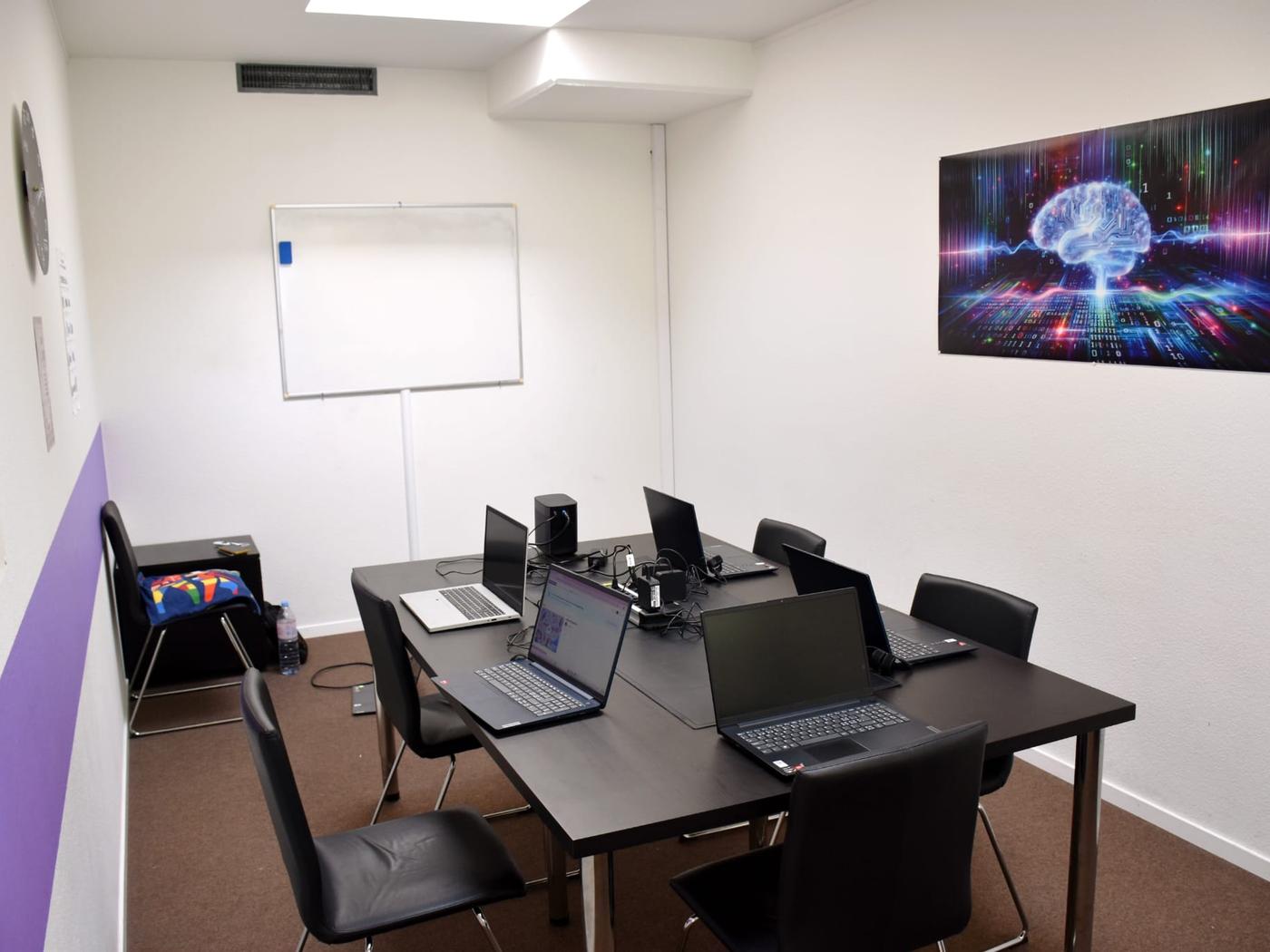
Whether Coding Knight, Digital Literacy or Python: your child experiences best in a free trial lesson how the lessons work. On site you will find our coding courses in Aarau at Laurenzenvorstadt 77 and our coding courses in Cham at Riedstrasse 3, and some levels also run online.
If school is a topic alongside coding, we also offer tutoring in Aarau and tutoring in Cham.
Frequently asked questions
Does a coding course replace computing lessons at school?
No, it complements them. At school children learn the basics with the whole class. With us they work on their own projects over months in groups of at most eight and get feedback on their own work.
Will AI not make coding unnecessary?
The tools change, the thinking behind them stays: breaking a task into steps, checking a result and finding a mistake. That is exactly what children need in order to use AI sensibly and to judge its results.
Will my child also learn to work with AI?
Yes. From age 12, projects with artificial intelligence are part of the programme. The AI course is available on site and online, in German or in English.
What does a coding course cost?
Coding Knight costs from CHF 132.50 per month, all other coding courses from CHF 157.50 per month, each in a small group and including a small gift. Siblings receive a discount, and children who also attend a maths course get a combined price on request.